
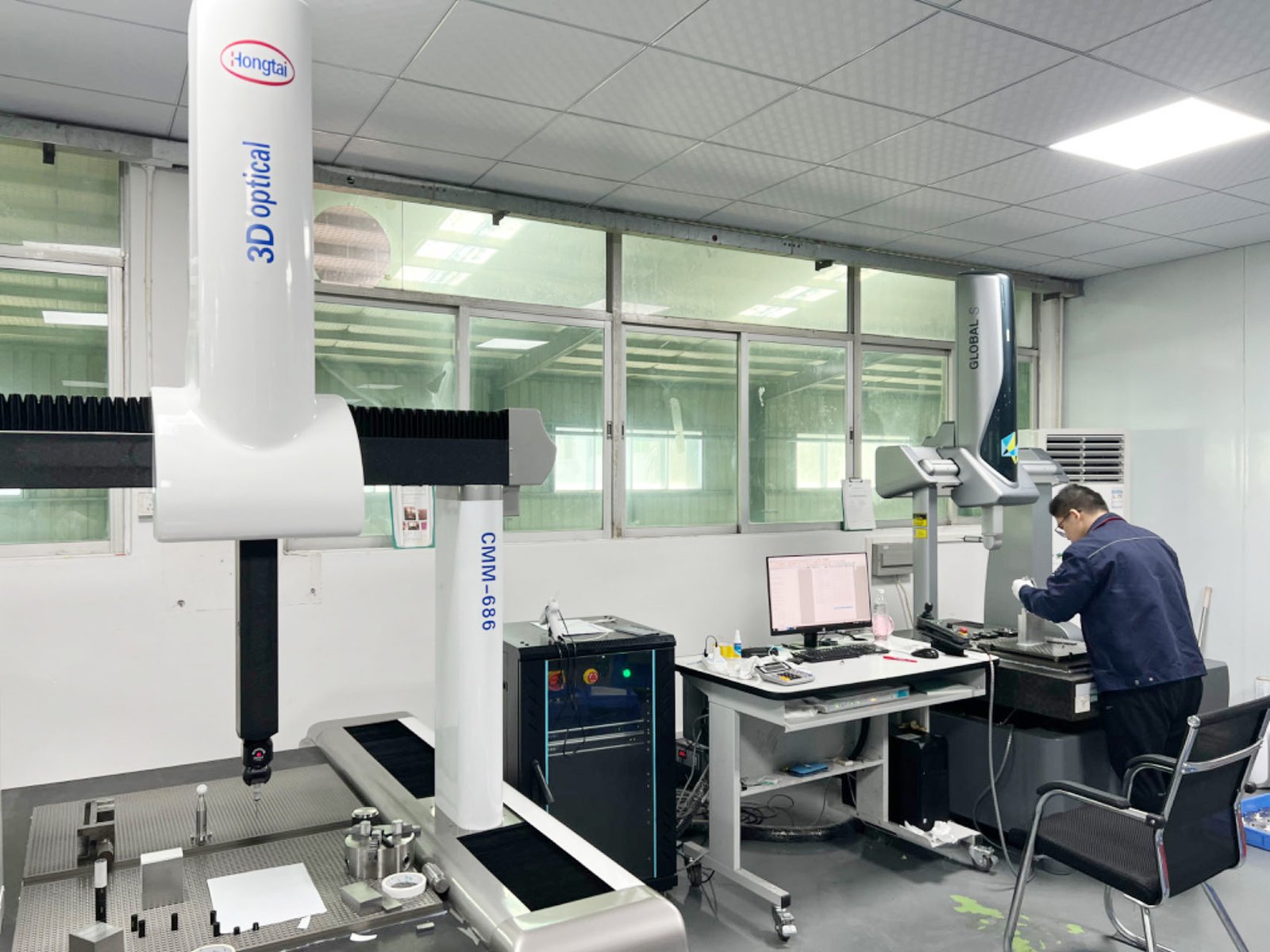
Every metal part can be produced several ways, and increasingly in several countries, so the decision is a matrix rather than a fork. A bracket that looks like a machining job may be cheaper as a die casting at volume, stronger as a forging, or impossible to make any other way than by printing if it carries internal channels. The mistake buyers make is comparing unit prices while ignoring tooling, freight, and inspection, or comparing a cast part at loose tolerance with a machined part at tight tolerance as if they were the same product. This article puts custom metal parts manufacturing against its main alternatives and shows how to choose on total landed cost and function rather than habit.
1. What does choosing a metal parts manufacturer actually buy you?
Machining starts from solid stock and cuts to shape, which provides three things no alternative offers by default. The material is the exact wrought grade on your drawing, bought with a certificate rather than poured or remelted. The tolerances are the tightest of any common process: milling and turning hold ±0.003 mm, precision grinding reaches ±0.002 mm, and critical characteristics run to Ppk ≥ 1.67 initial. And there is no tooling, so a design change costs a new program, not a new die.
What machining gives up is material efficiency and the ability to form internal cavities. When most of the billet ends up as chips, a casting or forging that starts near net shape saves real money. When the part needs internal passages, printing or casting earns its place. The buyer's question is which of those trade-offs matters at the quantity and tolerance the drawing actually demands, and that question is answered with a spreadsheet, not a slogan.
2. At what quantity does casting or forging take over from machining?
There is no fixed crossover because three variables set it: tooling cost, blank cost, and how much machining the cast or forged blank still needs. A small die-cast housing may beat machining at a few thousand pieces. A sand-cast bracket with heavy machining may never catch up, because the casting saves little if nearly every surface is still cut. Model total cost over the lifetime order quantity — tooling amortized, stock or blank cost, machining, finishing, inspection — rather than trusting a round number.
Forging has a separate logic that is not purely economic. Forging aligns the grain structure with the part shape, which is why load-bearing aerospace and automotive components are forged regardless of the price comparison. When a forging is specified, CNC machining usually still appears at the end of the route, finishing the faces and bores the forging cannot hold. Buyers should price the whole route — forging plus finish machining — and manage both suppliers rather than treating the forging quote as the total cost.
Two casting families deserve their own note. Die casting suits high volumes of small, thin-walled aluminum and zinc parts where the die cost amortizes quickly. Investment casting suits complex shapes in stainless, titanium, and superalloys where the wax-tooling cost is justified by the part value. Sand casting is the low-cost end for large simple shapes but leaves the roughest surface and the loosest envelope. Whichever family fits, the rule is the same: price the route, including the machining the casting still needs, and confirm the foundry's certificates if the alloy must meet a named spec.
3. When is additive manufacturing the right call instead of machining?
Additive manufacturing wins on geometry that no cutter can reach. Internal conformal cooling channels, lattices, organic enclosures, and single-piece assemblies with captive features are printing's honest domain, and parts with that geometry should be printed even when machining could quote them. Polymer printing also wins on speed for a local one-off fit check. Beyond those cases, printing competes at a structural disadvantage: a printed metal part carries a different microstructure from wrought stock, a rough as-built surface, and unless it is hot isostatically pressed and machined, lower fatigue performance.
The economic tell is the hidden second process. A printed metal part normally needs support removal, heat treatment, and machining of its functional surfaces, so the comparison is rarely "printed versus machined" but "printed blank plus machining versus machined part." Once the critical faces are machined anyway, the printed blank has added a process to arrive at a surface machining could have produced directly. And if the production part will be machined or cast, prototype it machined or cast so the sample shares the production process.
4. Which material should the manufacturing quote actually use?
The material decision usually matters more than the process decision, because it sets the physical ceiling on what the part can do. The table below is the practical map a buyer works from when quoting custom metal parts.
| Material | Where it earns its keep | What to watch |
|---|---|---|
| 6061-T6 aluminum | Light structural parts, housings, brackets | Lowest cost per part; anodizes well |
| 7075-T6 aluminum | High-strength parts where weight matters | Harder on tooling; thin walls can move as stress relieves |
| 303 / 304 stainless | General corrosion resistance and strength | 303 machines more freely than 304 on small parts |
| 316L stainless | Salt-water and chemical exposure | Work-hardens; needs rigid setups |
| 17-4PH stainless | High strength plus corrosion resistance | Often machined annealed, then heat treated and checked |
| Ti-6Al-4V | Strength-to-weight critical applications | Premium price and lead time; confirm stock sourcing |
| Brass, copper, engineering plastics | Bearings, conductors, insulators, light duty | Each brings its own chip, finish, and tolerance behavior |
Two rules keep the decision honest. First, name the grade and condition on the drawing, because a certificate can only prove what was written down. Second, resist both the upgrade and the downgrade — a 304 part that could run in 303, or a 7075 part that could run in 6061, carries cost that buys no function, while substituting a cheaper grade for a 17-4PH or titanium design produces a different part, not a discount. The parts page of this site shows custom components across these material families.
5. How do machined parts compare with sheet metal for brackets and housings?
Sheet metal is less a competitor to machining than a neighbor with a clear boundary. When the part is an enclosure, a frame, or a bracket built from flat stock with bends, and the tolerances are open enough for forming, sheet metal wins on material cost and weight. Profiles and holes are punched or laser-cut, bends are formed, and the result is a light, stiff structure for a fraction of the cost of a solid machined blank. The boundary is tolerance: forming carries springback, so formed dimensions hold a looser envelope, and a surface that must be flat or true belongs to machining.
Hybrids are common and worth quoting deliberately — a sheet-metal body with machined mounting bosses, or a formed bracket with machined locating holes. When you send a hybrid to a metal parts manufacturer, it machines the features that matter and may recommend a forming partner for the body, or machine the whole part when the quantity is too small to justify the tooling. State the functional tolerances on the drawing and let the quote show which combination delivers them at the lowest total cost.
6. What do tolerance and finish cost differently across the process options?
Each process has a native dimensional envelope, and that is where cross-process comparisons break down. Machining is the reference: ±0.003 mm on turned and milled features, ±0.002 mm in precision grinding, with finishes from as-machined through anodized, plated, and polished, all measured and reported. Cast parts inherit shrinkage and tool wear, so critical bores are machined after casting. Printed parts need machining on functional surfaces. Formed parts carry springback. A part quoted to "standard" tolerances in one process may be quoted to a looser envelope in another, and the drawings will look identical while the parts do not.
The fair comparison therefore prices the drawing, not the process. Mark the critical characteristics and their tolerances, name the inspection evidence you want — a CMM report on the machined bores, for example — and ask each process supplier what it holds natively and what it must add to meet your callouts. A casting quote that needs post-cast machining on five surfaces is really a machining quote with an extra step, and it should be read that way. The services page of this site lists the finishing and inspection steps that attach to a machined part once the process is chosen.
7. How do you compare a China manufacturing quote with local alternatives fairly?
The phrase "metal parts from China" makes buyers compare against local options, and that comparison only works on landed cost and elapsed time. Build the model over your planned quantity: piece price, tooling if any, freight and duties, inspection, and first-article lead time. Air freight from South China runs in days door to door, so for low to medium quantities the landed cost is often competitive with a local shop that carries higher hourly rates or has no open capacity. For large heavy parts the freight math changes, and regional supply wins.
Ask every option to state its incoterm, its shipping method, and what its price includes — material certificate, dimensional report, and surface finishing are not always in the number. A low ex-works price with expensive freight is not a low landed price, and a quote that excludes inspection is a different product from one that includes it. Compare the documented, delivered price and the elapsed days to parts in your hand; those two numbers are the only ones that matter to a schedule. The factory page for this site documents the operation behind one such quote, so the comparison is against a real shop rather than a broker.
There is also a quality dimension to the landed-cost model. A part machined in China under a certified system ships with material certificates and dimensional reports, and those documents carry value when your own quality system audits the supply chain. Price the inspection evidence into the comparison the same way you price freight: a supplier that includes the CMM report and the certificate is selling a different, more auditable product than one that ships parts alone. When the drawing tolerances matter, the cheaper unverifiable quote is rarely the cheaper part.
8. Why machine the custom sample even when production will use another process?
The most expensive process mistake is jumping to production tooling from a drawing that has never made a physical part. A machined sample removes that risk cheaply, because machining needs no tooling — the sample can be made in days and changed as fast as the design moves. The sample validates fit, function, material behavior, and assembly before the die or mold is cut, and it stays useful afterwards: as the master for casting, as the reference part for the mold maker, and as the benchmark the first molded or cast batch is measured against.
That sequence is why machining appears at both ends of many part lifecycles — early as the sample, late as the finishing process on forged, cast, or printed blanks. When a buyer asks which process to use, the accurate answer is usually a route rather than a single process, and machining is the thread running through it. The quality page documents the inspection evidence that travels with machined samples and parts, whichever route the production part finally takes.
And when the production route does stay with a metal parts manufacturer in China, the sample order doubles as the qualification order. The shop that machines your sample cleanly, reports it honestly, and answers your revisions quickly has demonstrated the behaviors the production run will need. Start with a part small enough to test, and scale it once the sample, the report, and the communication have all passed — the sample is the down payment on a supplier, not just on a part.
The buyer's rule of thumb: let quantity, material, and tolerance pick the process, and price the whole route over the whole quantity at landed cost. When the design is still moving or the volume is uncertain, custom machining is the process that keeps your options open.
Frequently Asked Questions
When should a metal part go to custom manufacturing instead of casting or forging?
When the quantity is low to medium, when the tolerance is tight, when the material must be the exact wrought grade on the drawing, or when the design is still changing. Machining needs no tooling, so the per-part cost stays flat from one piece upward. Casting and forging amortize tooling only at higher volumes, and forging is specified mainly for the grain structure it creates.
At what quantity does casting or forging beat metal parts manufacturing?
The crossover depends on part size, tooling cost, and how much machining the cast or forged blank still needs. A small die casting can cross over in the thousands; a large casting that needs every surface machined may never catch up. Model total cost over your lifetime quantity instead of trusting a round number.
When is 3D printing the right process instead of machining?
When the geometry cannot be machined — internal conformal channels, lattices, or organic enclosures — or when a polymer one-off is needed overnight. For load-bearing metal parts, printing costs more per part and still needs machining on functional surfaces, so it usually loses to machining on total cost and material properties.
Which material should a manufactured metal part use?
Match it to function: 6061-T6 for light structural parts, 7075-T6 where strength is critical, 303 or 304 stainless for corrosion resistance, 316L for salt exposure, 17-4PH for high strength with corrosion resistance, and titanium where strength-to-weight justifies its cost. Name the grade and condition on the drawing so the certificate can prove it.
Does shipping from China make metal parts manufacturing uncompetitive for small batches?
Not automatically. Machining runs in days either way, and door-to-door air freight from South China adds a few days, so elapsed time is often competitive with a local shop that has no open capacity. Compare landed cost and elapsed days — price plus freight, documentation, and lead time — rather than the ex-works line.
Why machine a custom sample when production will use another process?
A machined sample validates geometry and material before the tooling spend, and it needs no dies or molds, so a design change is a new program rather than a new tool. The sample becomes the master for casting, the reference for the mold, and the benchmark the production output is measured against.
How do I compare quotes across processes and countries fairly?
Send the same drawing, material intent, and inspection requirement to every option, and compare total landed cost over your planned quantity: tooling amortized, piece price, freight and duties, inspection, and lead time. A quote that excludes tooling or freight is a different product from one that includes it.
Need help choosing a process for your part?
Send the model, the material intent, and the quantity through the contact page — the review will tell you which route fits and what the machined option costs at your volume.