
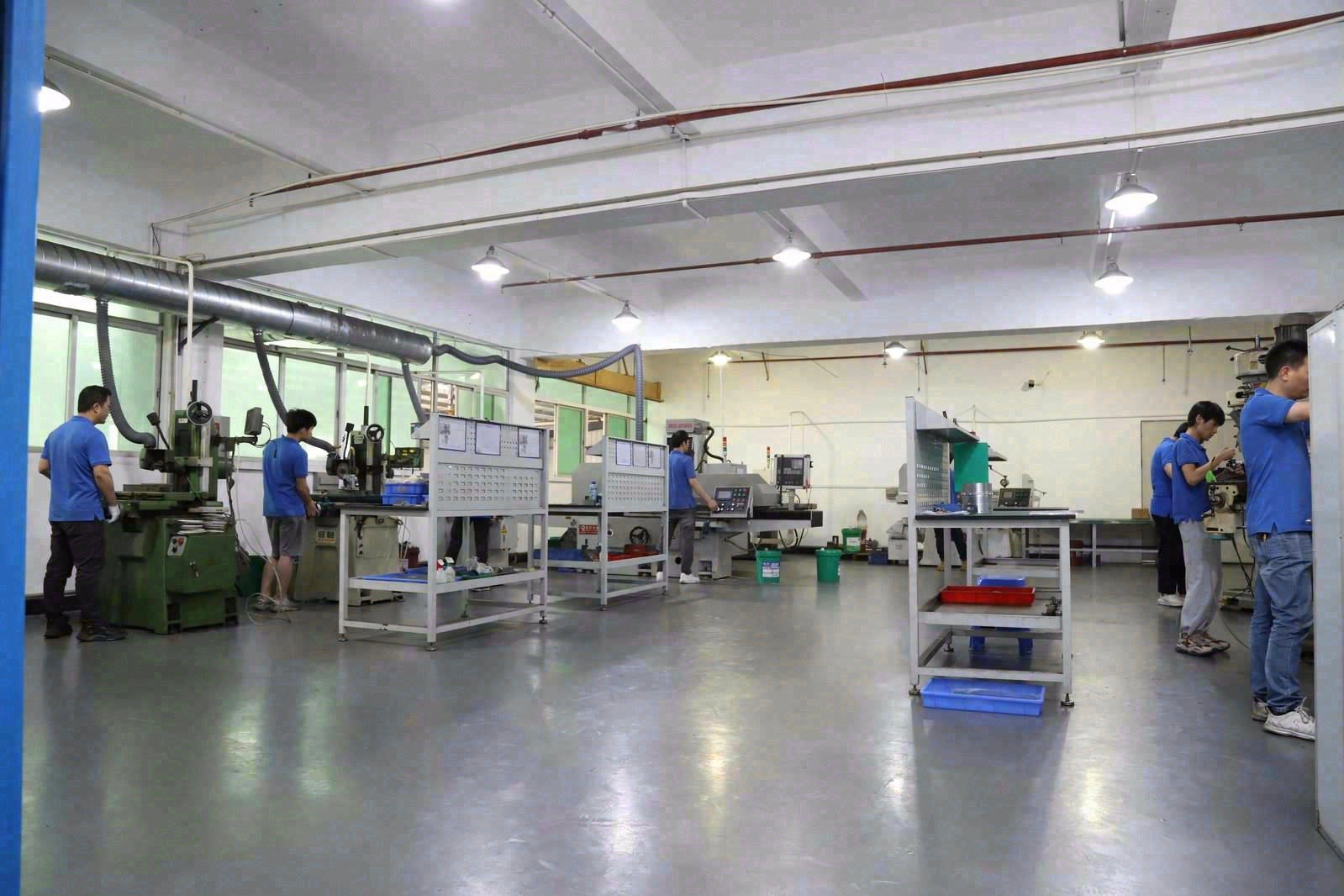
Sourcing metal parts from a manufacturer is different in kind from sourcing them from a job shop. A job shop sells you its capacity for a while; a manufacturer sells you its ability to repeat — the same part, to the same drawing, at the same quality, order after order. The distinction changes what you verify. With a manufacturer you are not qualifying a shop for one order; you are qualifying a production system for a program of orders, and the verification has to cover the system rather than the single lot. This guide explains what a buyer verifies when sourcing from a metal parts manufacturer and how the relationship matures from first lot to standing program.
What is different about buying from a manufacturer?
The repeat part is the manufacturer's core product, and the economics of repetition shape everything. On a first order, the manufacturer pays the same learning cost as any shop: programming, fixture proof, first article, process data. On the second order the program is stored, the fixture is on the shelf, and the process is proven, so the price falls and the date shortens. On the tenth order the part is a routine item and the quotes come from actuals rather than estimates. The repeat-part advantage is real, and it is the reason released parts should stay with one manufacturer instead of being re-sourced every cycle.
The buyer's mental model shifts accordingly: you are not buying lots, you are buying a production system that makes lots. The verification therefore targets the system — its capacity, its process stability, its documentation habits, its change control — because a lot is only as good as the system that produced it, and the tenth lot is produced by the system that the first lot qualified. On this site the manufacturing scope and quality practice are shown on the quality page, and the parts page at metal-parts-manufacturer-parts.html shows the kind of repeat production the system is built around.
Why do manufacturers quote better terms on repeat parts?
The repeat-part quotation reflects paid learning. The program is stored and proven, the fixtures and tooling are held from the last run, and the process data shows what the part actually costs to make, so the manufacturer can quote with confidence instead of padding for the unknown. The date shortens for the same reason: a released part inherits its setup and its first-article history, and the shop can slot the order against known process times. The repeat quotation is the manufacturer's strongest offer, and it is the one buyers should structure their purchasing to take advantage of.
To capture the advantage, the first order has to be treated as an investment in the program rather than as a single purchase. The revision should be frozen deliberately, the fixtures and tooling identified as part of the asset, and the process data collected as the baseline for future capability claims. A first order that is documented as the foundation of a program buys back its own cost many times on the repeats; a first order that is treated as a one-off throws the learning away every time the part returns to the market. The manufacturer's better repeat terms are available to any buyer who builds the program instead of merely ordering the part.
Which evidence shows a manufacturer can hold a production run?
Production capability is shown by production evidence, and the evidence has a specific shape. Process capability data on the critical features — a stable process at Ppk ≥ 1.67 initial across a run — shows the process is centered and controlled rather than lucky. Run records from previous lots show the part has been made consistently before, with the actual times and yields that production really delivered. First-article and lot reports that reconcile with the drawing show the documentation habit is real rather than episodic. Together the three build a picture of a system that can hold the drawing lot after lot.
Ask the manufacturer for the production evidence before you commit a program, not after. A manufacturer that quotes from actuals can show the last run's data; one that quotes from estimates cannot. Where the part is new to the manufacturer, the evidence comes from similar parts — the process stability on comparable features, the yield on comparable materials — which is the closest available proof that the system will hold your drawing. The question is always the same: show me the process behind the promise, because the process is what will be running on your tenth lot.
Capacity evidence matters for a different reason: a repeat program needs room to grow. Ask what the current load is on the machines that make your part, how much open capacity the plant holds, and how the manufacturer plans its production schedule. A manufacturer whose capacity is visible and planned is one whose program can absorb your volume increases; one whose schedule is invisible is one whose lead times will extend without warning exactly when your demand rises.
How do you structure an agreement for repeating parts?
Repeat parts reward a blanket or scheduling agreement, because the standing terms convert each order from a negotiation into an event. The agreement fixes the forecast horizon, the release mechanism, the lot size, the lead time, and the quality gates once, and individual releases run against the standing terms as the demand materializes. The manufacturer can plan its capacity around your program instead of reacting to individual orders, and the capacity planning is what produces the short, reliable dates that repeat parts deserve.
The agreement also stabilizes the quality conversation. With the gates fixed in the standing terms — first article on any change, pre-shipment evidence on every lot, receiving checks on every shipment — each release runs the same checks without re-negotiating them. The buyer's leverage shifts from the single order to the program: the manufacturer values the continuing volume, so the quality standard is enforced by the relationship rather than by the individual purchase order. The scheduling structure and the standing quality terms together are what turn a vendor of lots into a manufacturer of your program.
Which quality gates protect you across many purchase orders?
The gates that protect a single order protect a program, provided they run every time. The first article is required when the part is new or when a feature changes, and it should cover every characteristic against the approved revision. The pre-shipment gate runs on every lot — the dimensional report, the certificate, the photos, the packing list, tied to the lot and the current revision. Receiving checks run on every shipment, comparing the documents to the order and the samples to the drawing. The gates are the constant; what changes with trust is the speed and smoothness with which they run, not their existence.
The buyer's discipline across many orders is to run the gates even when the part is routine and the supplier is proven. The certificate is still checked at receiving, the report still compared to the revision, the pre-shipment evidence still reviewed before the balance. A released part whose gates are skipped is a part whose control has been assumed, and assumption is exactly how a long relationship quietly drifts out of specification. The program that keeps its gates open is the program whose quality stays constant, which is the entire reason a manufacturer's repeatability is worth buying in the first place.
When a gate does fail, the handling matters more than the failure. The manufacturer that documents the nonconformance, quarantines the affected lot, and proposes a remedy within the standing terms is behaving exactly as a long relationship needs; one that argues about the evidence is telling you what the tenth failure will look like. Write the remedy rule into the standing terms — rework, replacement, or documented concession — so every gate that fails has a defined next step instead of a fresh dispute.
What documentation should travel with each production lot?
A released part produces a routine document set, and the routine is its value. Each lot should travel with the lot record, the material certificate tied to the heat actually cut, the dimensional report against the current revision, and the packing evidence. Because the part is released and the format is established, the documents become identical in shape lot after lot, and consistency of format is what makes a many-lot file auditable, because an auditor can compare any two lots without deciphering two different systems.
Specify the document set once, in the standing terms, and hold it constant. When the format drifts — a report that loses its revision reference, a certificate without a heat number — the drift is the signal, and it should be corrected at the lot where it appears rather than accepted as the new normal. The manufacturer that produces the same clean document set on every lot is the manufacturer whose file assembles itself; one that produces documents of varying quality is one whose audit trail will vary with it. Documentation consistency is not a small thing in a repeat relationship; it is the evidence that the whole system is running to a standard.
How do you manage engineering changes across released production?
The released part is stable until it is not, and the change is where programs go wrong. An engineering change touches three things that must move together: the drawing, the production process, and the lot records. A change that moves only the drawing leaves the shop running the old program; a change that moves only the shop leaves your file describing the old part; and either way the lot records no longer describe what was made. The change record is the thread that keeps all three aligned, and it should name the old revision, the new revision, the reason, and the effective lot.
Put the change rule in the standing terms: no change is effective until the revised drawing is approved, the program is updated, and the first article of the changed part is reviewed. Agree who evaluates the change's effect on cost, schedule, and existing stock, because a change that renders finished stock obsolete is a change with a price. The manufacturer that documents changes through the same discipline as the original release is the manufacturer whose program stays coherent; one that lets changes drift through phone calls is one whose file will eventually describe a part that was never made.
What makes the manufacturer relationship worth scaling?
A manufacturer relationship scales when the evidence accumulates faster than the trust extends. Each clean lot adds a data point; each gate that runs adds a record; each change that is documented adds a thread; and after a dozen lots the manufacturer's system is no longer a claim but a demonstrated history. That history is what justifies scaling — larger release quantities, less frequent re-qualification, faster payment terms, and earlier involvement in new designs. The scaling is earned by the evidence, and it should be visible in the terms so the manufacturer knows the relationship rewards performance.
The relationship also scales into the design phase. A manufacturer that has made your released parts knows your tolerances, your materials, and your documentation habits, and its input on the next design is worth more than any quotation. The buyers who source from a metal parts manufacturer successfully are the ones who build the program, run the gates every lot, control the changes, and let the accumulated evidence decide the scale of the relationship. The factory behind this site, described on the factory page, runs its production and quality system to support exactly that kind of long relationship — the kind where the part is bought once and its repeatability is bought every time after.
The buyer's rule of thumb: buy the repeatable run, not the single lot. Qualify the system with production evidence, run the gates on every lot, control the changes through the drawing and the program together, and scale the relationship on the accumulated record.
Frequently Asked Questions
What is the difference between sourcing from a job shop and from a manufacturer?
A job shop sells capacity; a manufacturer sells repeatability. A job shop re-learns some of your part on each order, while a manufacturer keeps the program, the fixtures, and the process data so the next lot runs faster and more consistently. When a part repeats, the manufacturer's model is usually the better one to source against.
Why do manufacturers quote better terms on repeat parts?
Because the learning cost has already been paid. The program exists, the fixtures are stored, the process is proven, and the shop can quote from actuals instead of estimates. The repeat-part advantage is real, and it is why buyers should hold released parts with one manufacturer rather than re-sourcing them each time.
Which evidence shows a manufacturer can hold a production run?
The production evidence: process capability data on the critical features, run records from previous lots, and first-article and lot reports that reconcile with the drawing. A manufacturer that can show its process staying centered across lots is selling repeatability; one that can show only a brochure is selling the idea of it.
How do I structure an agreement for repeating parts?
A blanket or scheduling agreement works well: the forecast, the release mechanism, the lot size, and the lead time are agreed once, and individual releases run against the standing terms. The agreement converts each order from a fresh negotiation into a scheduled event, which is what lets a manufacturer plan capacity around your program.
Which quality gates protect me across many purchase orders?
The same gates as a single order, run every time: first article on new or changed features, pre-shipment evidence on every lot, and receiving checks against the drawing. The discipline of the gates is what stays constant across lots; what changes with trust is the speed and smoothness, not the existence, of the checks.
What documentation should travel with each production lot?
The lot record with the material certificate, the dimensional report against the current revision, and the packing evidence. For a released part the documentation becomes routine — the same documents every lot, in the same format — which is exactly what makes many lots auditable: consistency is the property a file needs.
How do I manage engineering changes across released production?
Through a written change process that touches the drawing, the program, and the lot records together. A change that moves only the drawing leaves the production process running on the old program; a change that moves only the shop leaves your file describing the old part. The change record is the thread that keeps all three aligned.
Ready to qualify a manufacturer for your repeat program?
Send the drawing and your forecast through the contact page — the review returns the production evidence, the standing terms, and the quality gates for the program, in writing.